A customer is ready to pay.
Your website works, the product is in the cart, and checkout is open.
Then the business has to answer one surprisingly complicated question:
Which payment gateway should we use?
For a Malaysia business, the answer is rarely just:
“Pick the one with FPX.”
Different gateways charge FPX, DuitNow, cards and wallets differently. Some have annual plans. Some are purely pay-per-transaction. Settlement timing can differ. Recurring payments may use a completely different payment method. International cards may cost more.
And even when two gateways support the same payment method, the checkout experience and integration can still be different.
So the better question is:
“Which gateway fits our customers, transaction size and website workflow?”
FPX, DuitNow, Cards and Wallets Are Not the Same Thing
| Payment Method | How the Customer Pays | What the Business Should Check |
|---|---|---|
| FPX | Select bank, log in or open banking app, authorise payment | Transaction fee, redirect flow, settlement and confirmation |
| DuitNow Online Banking / Wallets | Select participating bank or eWallet and approve payment | Provider support, checkout flow and transaction pricing |
| DuitNow QR | Scan QR using a participating banking or wallet app | Online vs in-store use, dynamic vs static QR and reconciliation |
| Cards | Enter or use stored card details and complete authentication where required | Domestic, international, FX and dispute fees |
| eWallets / BNPL | Approve payment through supported wallet or instalment provider | MDR, settlement, customer demand and checkout complexity |
1. What Does a Payment Gateway Actually Do?
A payment gateway connects the customer's checkout action with the payment provider and your business system.
A simple eCommerce transaction may look like:
Cart → Checkout → Payment Method → Customer Authorisation → Payment Confirmation → Order Status → Fulfilment
The gateway therefore affects more than the Pay button.
It can affect:
- which payment methods customers can use,
- how quickly a payment is confirmed,
- when funds are paid out,
- how refunds are handled,
- how finance reconciles transactions,
- and how your website knows whether an order is actually paid.
This is why payment integration should be planned together with the website checkout rather than added at the end of development.
We covered the technical side in more detail in our guide to FPX, DuitNow and eCommerce checkout testing in Malaysia.
2. FPX vs DuitNow: What Is the Difference?
FPX is PayNet's online banking payment service.
At checkout, the customer selects FPX, chooses a participating bank, completes bank authentication and authorises the payment.
PayNet allows merchants to access FPX either through an acquiring bank or a third-party acquirer. For direct integrations, businesses go through setup, testing and UAT before production.
FPX is especially familiar for online purchases where the customer wants to pay directly from a Malaysian bank account.
DuitNow, however, is broader than one checkout button.
The DuitNow ecosystem includes products such as:
- DuitNow Transfer,
- DuitNow QR,
- DuitNow Online Banking / Wallets,
- and other related payment services.
For online checkout, DuitNow Online Banking / Wallets allows customers to move from the merchant checkout into a participating bank or eWallet environment to approve payment.
PayNet currently states that this service can receive payments through more than 40 banks and eWallets.
DuitNow QR is different again: the customer scans a QR code using a compatible banking or wallet app.
So when a payment gateway says:
“Supports DuitNow”
the business should still ask:
“Which DuitNow product exactly?”
3. Malaysia Payment Gateway Fees: A Published Pricing Snapshot
Payment gateway pricing can change, and businesses with higher transaction volume may qualify for custom rates.
However, current published pricing already shows how different the models can be.
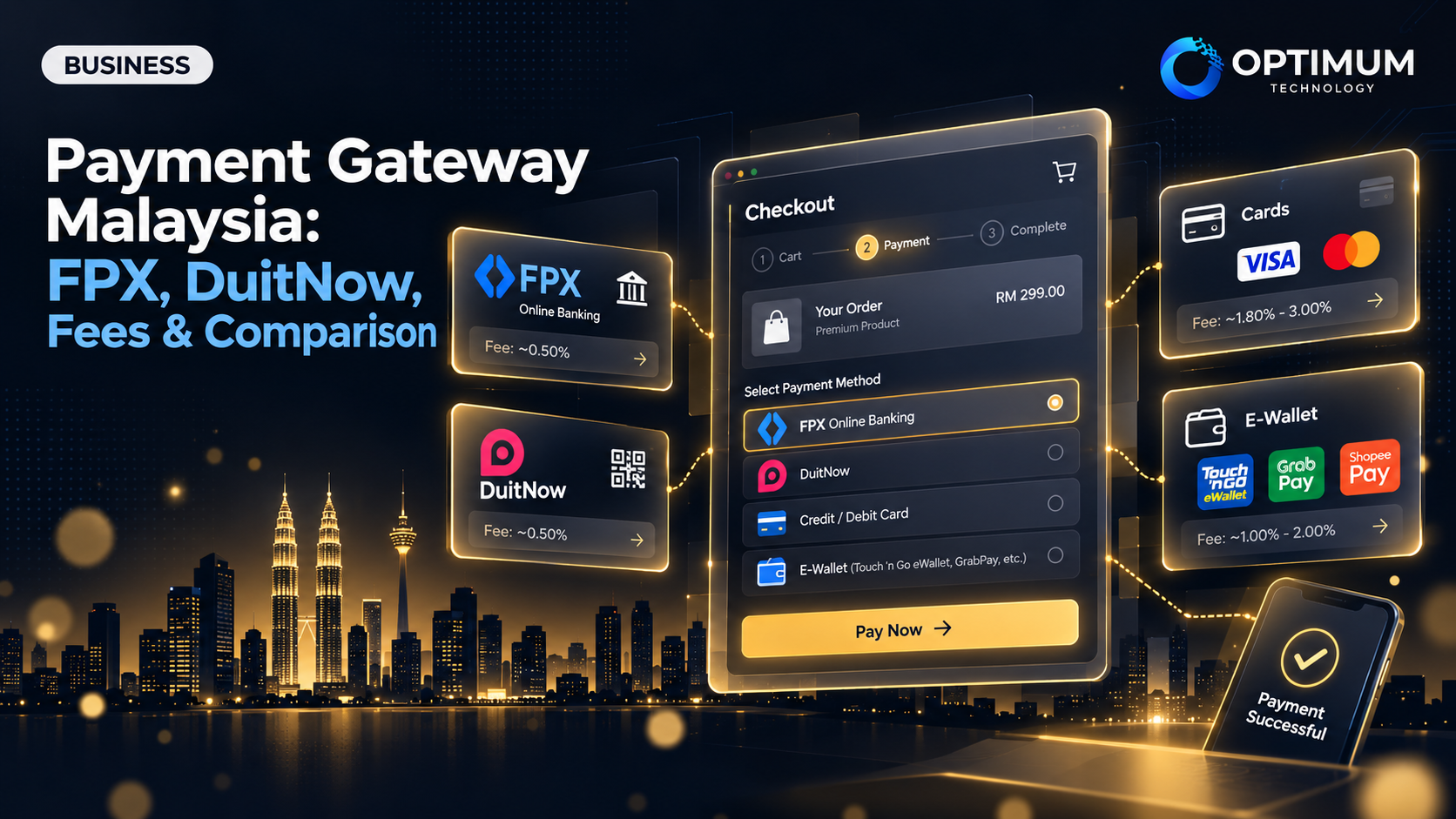
Payment Gateway Comparison
| Provider | FPX | DuitNow | Domestic Online Cards |
|---|---|---|---|
| Billplz Basic | RM1.25 B2C | DuitNow QR / Wallet: 1.5% | 1.8% |
| Billplz Standard | RM0.75 B2C | DuitNow QR / Wallet: 1.5% | 1.5% |
| HitPay | 1.8% + RM0.40 | 1.2% | 1.2% + RM1 |
| Curlec Basic | 1.5% or RM1, whichever is higher | DuitNow Pay: 1.2% or RM0.30, whichever is higher | 2.4% |
| Curlec Premium | 1.0% or RM1, whichever is higher | DuitNow Pay: 1.0% or RM0.30, whichever is higher | 2.0% |
| Stripe Malaysia | 3% + RM1 | Check current account / payment method availability | 3% + RM1 |
Pricing checked against public provider pages in October 2026. Rates may change and may differ for custom or enterprise agreements.
Billplz currently offers a free Basic plan and an annual Standard plan priced at RM999. Its published B2C FPX pricing is RM1.25 on Basic and RM0.75 on Standard.
HitPay currently uses pay-per-transaction pricing with no setup or monthly fee published on its Malaysia pricing page.
Curlec separates its published rates by plan, while Stripe Malaysia currently publishes a standard 3% + RM1 rate for both domestic cards and FPX.
These differences matter because a flat RM0.75 or RM1.25 fee behaves very differently from a percentage fee as transaction values increase.
For example, a business selling RM30 products has a different payment-cost profile from one selling RM3,000 equipment.
That is why comparing only one headline percentage can be misleading.
4. Transaction Fee Is Only One Part of the Cost
Before choosing a gateway, compare more than MDR or FPX fee.
Important questions include:
- Is there a setup or annual subscription fee?
- How quickly are funds settled?
- Does the provider support refunds?
- Are original transaction fees returned after a refund?
- What happens during a chargeback?
- Are international cards charged differently?
- Is there an extra currency conversion fee?
- Does the gateway support recurring billing?
- Are Shopify, WooCommerce or other plugin fees added?
- Can the business export transaction and reconciliation data?
For example, Stripe's current Malaysia standard pricing adds 1% for international cards and another 2% when currency conversion is required.
Billplz publishes different payout periods depending on the payment method, while HitPay publishes different pricing for online, recurring and cross-border payments.
This means:
The cheapest FPX rate does not automatically mean the cheapest overall payment setup.
The gateway should match the business model.
5. Which Type of Payment Gateway Fits Your Business?
There is no single provider that is automatically the best for every Malaysian business.
If most customers pay by FPX, a flat-fee model can become attractive, particularly as average transaction value increases.
If the business needs cards, wallets, BNPL and several payment methods in one checkout, payment method coverage and reconciliation may matter more than the lowest FPX fee.
If the business sells internationally, compare international card fees, currencies, foreign wallets and settlement requirements.
If the business charges subscriptions, check recurring billing separately. FPX itself is a customer-authenticated, single-use payment flow and is not designed as a recurring payment method.
If the business uses Shopify or WooCommerce, check whether the gateway has a supported plugin and whether the platform adds additional transaction fees.
If the business uses a custom website or system, API quality, documentation, webhooks and testing environments become much more important.
The gateway should fit how the company actually sells, not simply which logo is most familiar.
Building an eCommerce or payment-enabled website in Malaysia?
Payment method selection, checkout flow and payment confirmation should be planned as part of the website — not added after the design is finished.
Explore Website Design → Website Design · eCommerce · FPX · DuitNow · Payment Integration6. Test the Gateway Before the Website Goes Live
Once the business chooses a provider, the project is not finished.
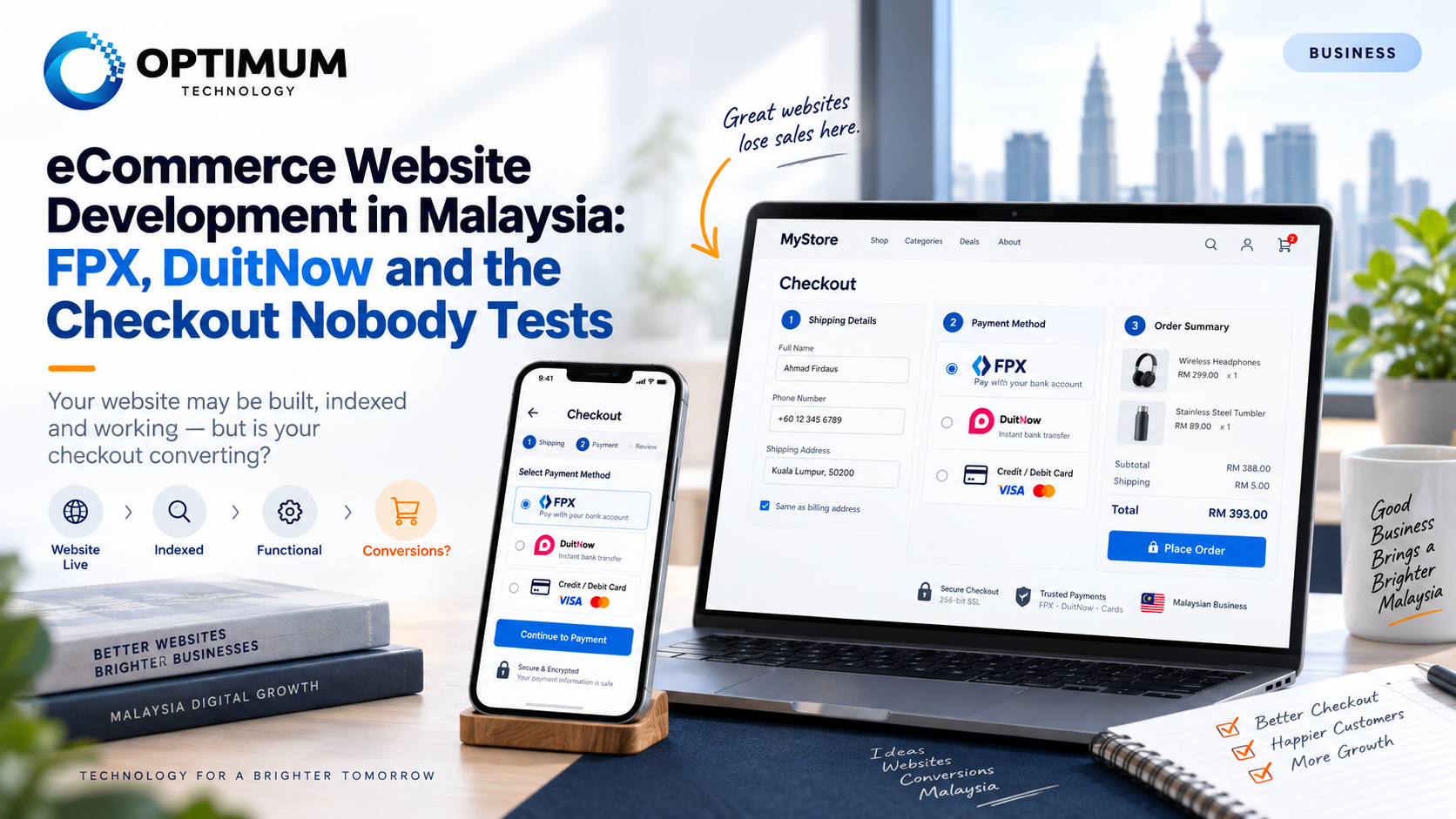
A proper checkout should test:
- successful FPX payments,
- customer cancellation,
- failed authorisation,
- DuitNow or wallet payment confirmation,
- mobile browser to banking-app switching,
- duplicate Pay clicks,
- slow or delayed callbacks,
- refund workflows,
- payment success without browser return,
- and whether the order status updates correctly.
The website should not rely only on the customer landing on a “Payment Successful” page.
Reliable integration should use the gateway's server-side confirmation mechanism so that the business system can determine whether payment really succeeded.
This is also why checkout should be considered when comparing overall website development cost in Malaysia.
A quotation that says:
“Payment Gateway Included”
does not tell you whether the scope includes proper payment-state handling, mobile testing, failed transactions, refunds or reconciliation.
And before worrying about the payment button, the rest of the journey still needs to convert. Our guide to homepage design that converts explains the earlier part of that customer journey.
The Bottom Line
A Malaysia payment gateway should not be selected by fee alone.
Start with the business:
Who is paying → How much → Which payment method → How often → Where the sale happens → How the payment connects back to the business
Then compare:
FPX → DuitNow → Cards → Wallets → Fees → Settlement → Refunds → Recurring Payments → Integration → Reporting
A cheaper gateway can become expensive if the checkout does not fit the business workflow.
And a slightly higher transaction fee may still make sense if the provider reduces manual reconciliation, supports the right payment methods and integrates reliably with the website.
The goal is not to find the gateway with the smallest number on the pricing page.
It is to build a payment flow customers can complete — and the business can manage after the money comes in.
Payment gateway pricing, payment method availability, settlement periods and promotional or enterprise rates can change. The pricing examples in this article are based on publicly available Malaysia pricing checked in October 2026. Businesses should confirm the latest rates and contract terms directly with each provider before making a decision.